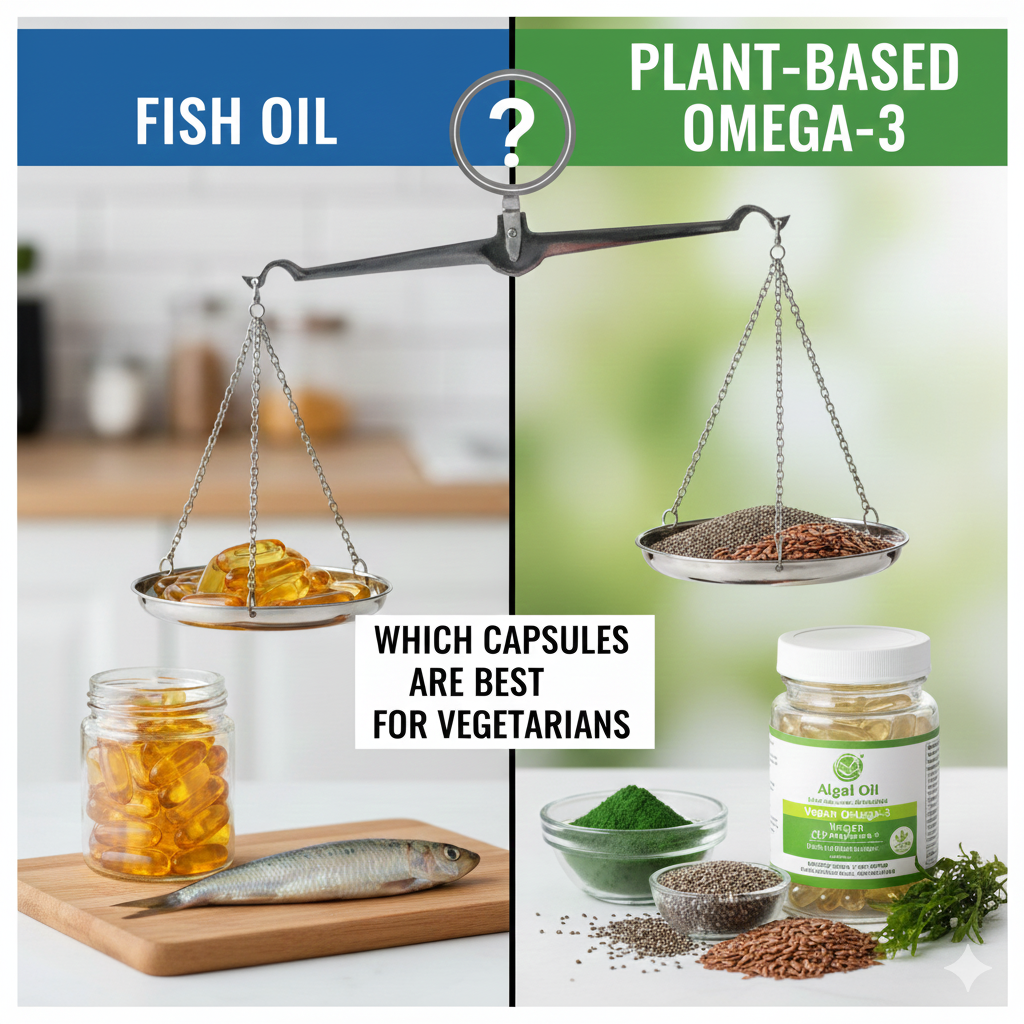
Omega-3 fatty acids are essential nutrients known for supporting heart health, brain function, joint mobility, skin glow, and overall wellness. Traditionally, fish oil has been promoted as the best source of Omega-3—but what about vegetarians?
Many health-conscious people today ask:
Are vegetarian omega 3 capsules effective?
Can plant-based supplements match fish oil benefits?
Which option is cleaner, safer, and more sustainable?
With rising awareness of plant-based nutrition, vegetarian and vegan consumers are actively searching for fish oil alternatives for vegans that provide the same EPA and DHA benefits—without compromising dietary values.
What This Blog Promises You
In this detailed guide, you’ll learn:
The real difference between fish oil and plant-based omega 3 supplements
Why algae-based omega-3 is gaining popularity
Which omega-3 capsules are best for vegetarians in India
A clear vegetarian DHA EPA supplements comparison
Expert insights on cost, quality, and sustainability
By the end, you’ll confidently choose the best vegetarian omega 3 capsules for your health goals.
What Is Omega-3 and Why Is It Essential?
Omega-3 fatty acids are polyunsaturated fats that play a vital role in:
❤️ Heart health – reduces triglycerides and supports healthy cholesterol
🧠 Brain function – improves memory, focus, and cognitive health
🦴 Joint health – reduces inflammation and stiffness
✨ Skin health – improves hydration and glow (key fish oil capsules benefits for skin)
Since the human body cannot produce Omega-3 on its own, supplementation becomes necessary—especially for vegetarians.
Types of Omega-3 Fatty Acids Explained
1. ALA (Alpha-Linolenic Acid)
Found in flaxseed, chia seeds, walnuts
Plant-based
Limited conversion to EPA & DHA
2. EPA (Eicosapentaenoic Acid)
Anti-inflammatory
Supports heart and joint health
Traditionally from fish oil
3. DHA (Docosahexaenoic Acid)
Essential for brain, eye, and nervous system
Critical during pregnancy and aging
➡️ Key Concern for Vegetarians:
ALA conversion to EPA/DHA is inefficient (often less than 10%), making direct vegetarian DHA EPA supplements more effective.
Fish Oil Capsules: Benefits & Drawbacks
Benefits of Fish Oil Capsules
Rich source of EPA & DHA
Clinically researched
Known fish oil capsule benefits for skin, heart, and brain
Limitations
❌ Not suitable for vegetarians
Fishy burps and aftertaste
Risk of heavy metal contamination
Overfishing concerns and ocean pollution
Because of these drawbacks, many people are now shifting to plant-based omega-3 supplements.
Plant-Based Omega-3: The Vegetarian Solution
Common Vegetarian Sources
Chia seed oil
Algal oil (most effective)
Why Algae Is the Game-Changer
Fish get their Omega-3 from algae—not the other way around. Algal oil provides direct DHA and EPA, making it the best algae omega 3 for vegetarians.
Benefits of Plant-Based Omega-3 Supplements
100% vegetarian & vegan
Clean and sustainable
No fishy smell or taste
Environment-friendly

Fish Oil vs. Plant-Based Omega-3: Detailed Comparison
| Feature | Fish Oil | Plant-Based Omega-3 |
|---|---|---|
| Source | Fish | Algae / Seeds |
| Vegetarian Friendly | ❌ No | ✅ Yes |
| EPA & DHA | High | High (Algal oil) |
| Taste | Fishy | Neutral |
| Sustainability | Moderate | Excellent |
| Purity Risk | Possible | Minimal |
Algae Power vs. Fish Oil: Bioavailable Omega-3 for Plant-Based Diets
Algal oil offers high bioavailability, meaning better absorption and utilization. For vegetarians following plant-based diets, algae omega-3 integrates seamlessly without digestive discomfort.
Why Vegetarians Choose Plant Omega-3 Capsules Over Traditional Fish Oil
Ethical and cruelty-free
Better digestive tolerance
No odor or reflux
Suitable for long-term daily use
This shift has boosted demand for top vegetarian omega 3 brands India.
EPA/DHA Showdown: Plant-Based Capsules That Match Fish Oil Benefits
High-quality algae supplements now provide 300–600 mg DHA + EPA per serving, comparable to fish oil—making them a reliable fish oil alternative for vegans.
Cost vs. Quality: Affordable Vegetarian Capsules That Deliver Results
While algae omega-3 may appear costlier, it offers:
Higher purity
No contamination risk
Better ethical value
💡 Tip: Always compare EPA/DHA dosage, not just price.
Sustainability Edge: Eco-Friendly Algae Omega-3 Without Ocean Impact
Zero overfishing
Lower carbon footprint
Cultivated in controlled environments
This makes algae omega-3 the most sustainable omega-3 source available today.
Expert Verdict: Best Omega-3 Capsules for Vegetarians
Who Should Choose Algae Omega-3?
Vegetarians & vegans
People allergic to fish
Pregnant women (doctor advised)
Heart & brain health-focused individuals
How to Choose the Right Vegetarian Omega-3 Capsule
Look for DHA + EPA content
Certified vegetarian/vegan label
Reputed brand transparency
No artificial colors or preservatives
Frequently Asked Questions (FAQs)
Are vegetarian omega-3 capsules effective?
Yes, especially algae-based supplements containing DHA and EPA.
Can plant-based omega-3 replace fish oil completely?
Yes. Algal oil provides the same essential fatty acids.
Which omega-3 is best for skin health?
Both fish oil and algae omega-3 support skin, but algae is cleaner and vegetarian.
Is daily omega-3 safe?
Yes, when taken within the recommended dosage.
Final Conclusion
Choosing between fish oil and plant-based omega-3 depends on your dietary preferences, ethics, and sustainability goals. For vegetarians, algae-based omega-3 capsules are the clear winner, offering the same benefits without compromise.
If you’re looking for clean, ethical, and effective vegetarian omega-3 capsules, plant-based DHA & EPA supplements are the smartest choice for modern wellness.
Buy Nicolson Flaxseed Oil Capsule: Click here
Buy Nicolson Omega-3 Fish Oil Capsule: Click here